Stress ECHO & DSE
Stress echocardiography is a non-invasive test that shows how your heart performs when it's working harder than usual. It combines ultrasound imaging with physical or chemical stress to detect heart problems—especially coronary artery disease (CAD).
Unlike a resting echo, this test is done during or after exercise to see how blood flows through the heart muscle.
How Is Stress Echo Performed?
There are two main types:
-
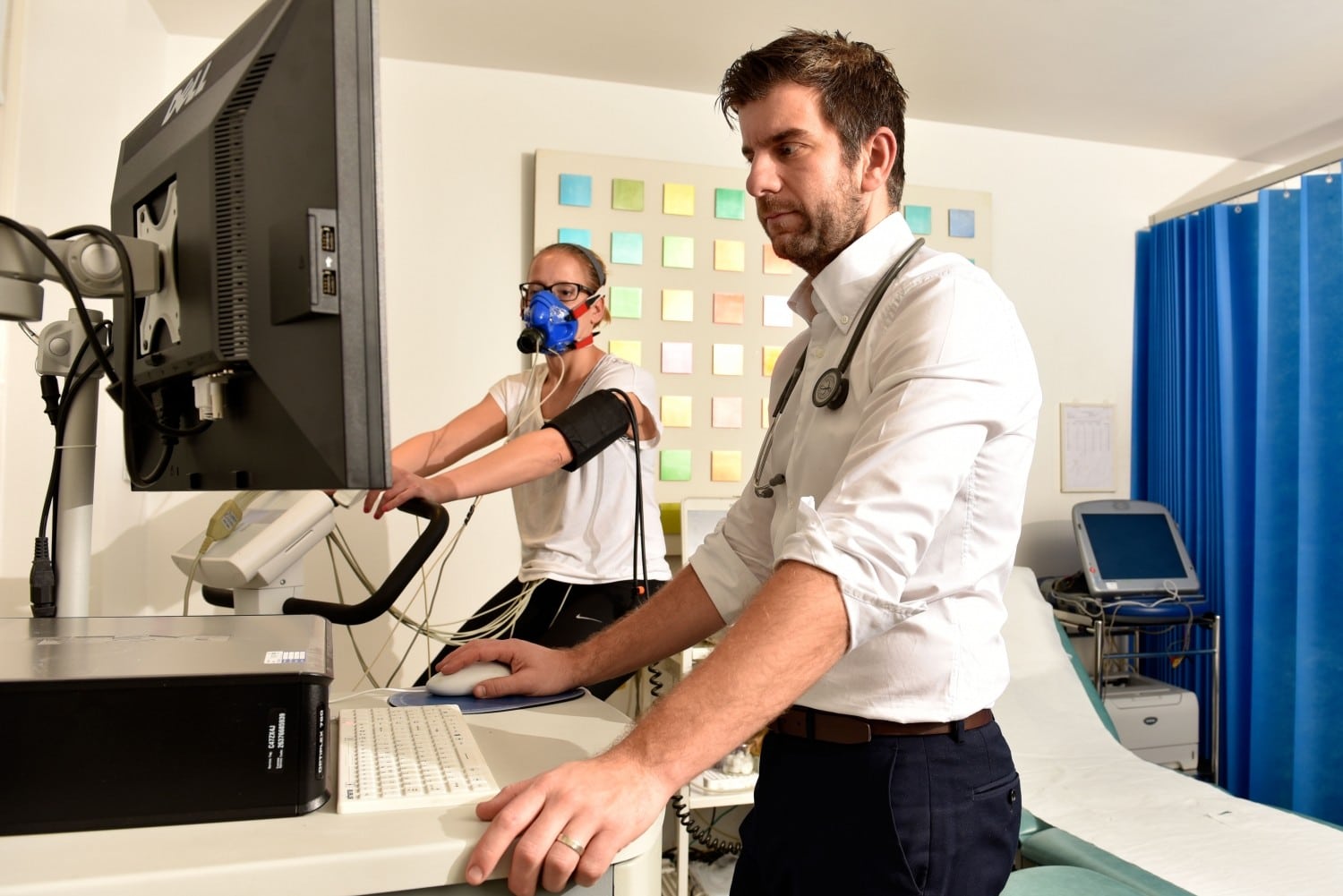
Exercise Stress Echocardiography
- You walk or run on a treadmill.
- Heart rate, rhythm, and blood pressure are monitored.
- Ultrasound images are taken before and immediately after exercise.
- It shows how your heart reacts to physical stress.
- This method mimics natural conditions and is ideal for most patients.
-
Dobutamine Stress Echocardiography (DSE)
- For patients who can’t exercise, Dobutamine—a medication—is used to simulate exercise.
How It Works:
- Dobutamine is given through an IV.
- It increases heart rate and force of contraction.
- Echo images are taken at rest and at peak drug effect.
- It helps detect areas of reduced blood flow and weakened muscle movement.
- DSE is safe, effective, and widely used in elderly or physically limited patients.
When Is Stress Echo Recommended?
Doctors suggest this test to:
- Diagnose coronary artery disease
- Evaluate unexplained chest pain or breathlessness
- Monitor heart condition after a heart attack
- Assess the effectiveness of treatment or surgery
- Pre-operative cardiac evaluation
- Measure viability of heart muscle in damaged areas
It helps avoid unnecessary angiograms and pinpoints issues early.
What Can It Detect?
Stress echo can identify:
- Blocked or narrowed arteries
- Poor heart wall motion under stress
- Ischemia (reduced blood flow)
- Viable but weak heart muscle
- Heart failure risk and response to treatment
These insights help guide the right treatment and lifestyle changes.
Procedure Overview
- You’ll lie down while resting echo images are taken.
- You'll then either exercise or receive dobutamine via IV.
- Your heart activity is continuously monitored.
- Echo images are captured at multiple stages.
- The entire test takes around 45–60 minutes.
- No radiation is involved, and the test is generally well tolerated.
Is Stress Echo Safe?
- Yes, it's very safe when done under supervision.
- Mild side effects like flushing or palpitations may occur
- Serious complications are rare
- The test is always performed with emergency backup on hand
- Patients are monitored closely throughout the procedure.
Advantages of Stress Echocardiography
- Non-invasive and radiation-free
- Highly accurate for detecting ischemia
- Helps avoid unnecessary procedures
- Provides real-time functional heart data
- Suitable for pre-op cardiac risk assessment