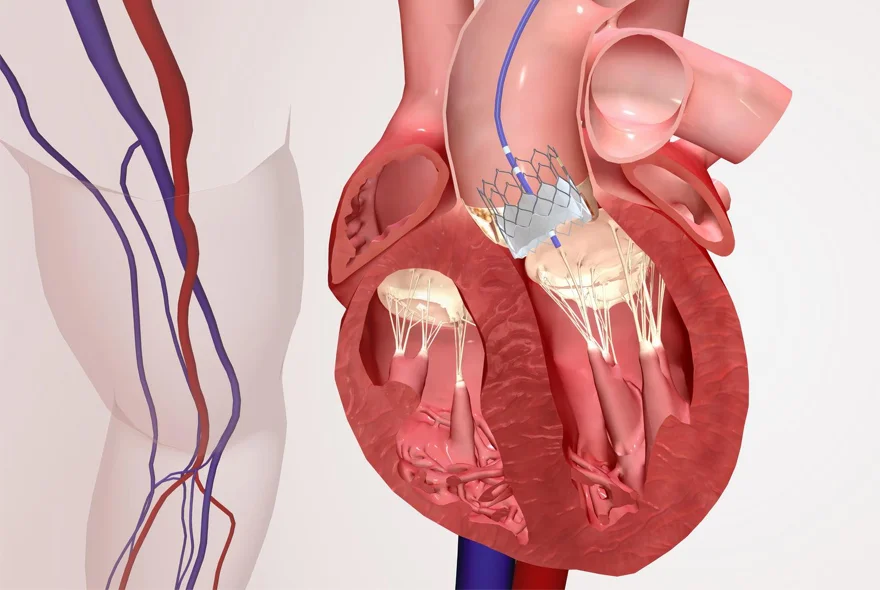
Balloon Valvuloplasty is a non-surgical procedure used to treat narrowed heart valves (valvular stenosis). A small balloon is inflated inside the affected valve to improve blood flow and reduce symptoms.
It’s most commonly done on the mitral, aortic, and pulmonary valves, depending on which one is narrowed.
This procedure is recommended when a heart valve becomes stiff or tight, limiting blood flow. It may be due to:
- Rheumatic heart disease
- Congenital valve defects
- Age-related calcification
- Progressive narrowing from other conditions
Valvuloplasty relieves symptoms like fatigue, shortness of breath, dizziness, or chest pain.
Types of Balloon Valvuloplasty
-
Balloon Mitral Valvuloplasty (BMV)
Used for mitral valve stenosis, often caused by rheumatic fever.
- How It Works:
- A catheter is inserted through the groin into the heart.
- A balloon at the tip is positioned across the narrowed mitral valve.
- The balloon inflates to stretch the valve open.
- Blood flows more easily from the left atrium to the left ventricle.
- Best For:
- Patients with moderate-to-severe mitral stenosis
- Suitable valve anatomy without too much calcification
- People with symptoms but no major mitral regurgitation
-
Balloon Aortic Valvuloplasty (BAV)
Used for aortic valve stenosis, especially in high-risk patients or as a bridge to surgery or TAVR.
- How It Works:
- A catheter is inserted through the femoral artery.
- The balloon expands within the narrowed aortic valve.
- This temporarily improves blood flow from the heart to the body.
- Best For:
- High-risk surgical patients
- Children or young adults with congenital aortic stenosis
- Palliative care in critical elderly patients
-
Balloon Pulmonary Valvuloplasty (BPV)
Used to treat pulmonary valve stenosis, often seen in infants and children.
- How It Works:
- A catheter is placed through a vein into the right heart.
- The balloon is positioned across the pulmonary valve.
- When inflated, it widens the valve to improve blood flow to the lungs.
- Best For:
- Congenital pulmonary valve stenosis
- Children with mild to severe narrowing
- Select adults with isolated pulmonary stenosis
What to Expect During the Procedure
- You’ll receive mild sedation or anesthesia.
- The procedure usually takes 1–2 hours.
- A small incision is made in the groin or neck for catheter access.
- After balloon inflation, the catheter is removed.
- You’ll be monitored for several hours post-procedure.
Recovery and Aftercare
- Most patients recover quickly with minimal discomfort.
- You may stay in the hospital overnight.
- Normal activity can often resume within a few days.
- Follow-up echo checks ensure success and valve performance.
Benefits of Balloon Valvuloplasty
- Minimally invasive
- Faster recovery than open-heart surgery
- Significant relief of symptoms
- Improved blood flow and heart function
- Often avoids immediate need for surgery
Risks and Limitations
Though safe, some risks include:
- Bleeding or bruising at catheter site
- Valve regurgitation (leakage)
- Restenosis (re-narrowing over time)
- Arrhythmias or embolism (rare)
Balloon valvuloplasty is not suitable for heavily calcified or very leaky valves.