B1& B2, Sector 23, Sanjay Nagar, Ghaziabad, Uttar Pradesh 201002

+917015731540

drsaurabhbiswascardiologist@gmail.com
Endovascular Repair (EVAR)

Endovascular Repair (EVAR)

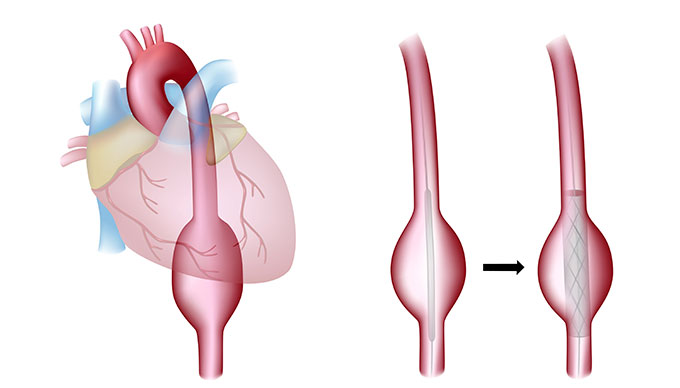
Endovascular Aneurysm Repair (EVAR) is a minimally invasive procedure used to treat an abdominal aortic aneurysm (AAA). This is a condition where the main artery (aorta) becomes enlarged and at risk of rupture. EVAR repairs the weak section of the artery without the need for open surgery.

It uses a stent graft, placed inside the artery, to support and seal off the aneurysm.

When Is EVAR Recommended?

  • The aneurysm is 5.5 cm or larger
  • There is rapid aneurysm growth
  • The aneurysm is leaking or at risk of rupture
  • The patient is unfit for open surgery due to age or health conditions

Early detection and treatment are key to preventing life-threatening rupture.

How the EVAR Procedure Works

  • Access Point: A small incision is made in the groin to reach the femoral artery.
  • Catheter Insertion: A catheter is guided through the artery to the aneurysm site.
  • Stent Graft Delivery: The stent graft (a metal mesh tube covered with fabric) is inserted and positioned precisely.
  • Sealing the Aneurysm: Once deployed, the graft reinforces the artery wall and reroutes blood flow through the graft.
  • Completion: Blood is now directed through the graft, reducing pressure on the aneurysm.

The procedure is guided by real-time X-ray imaging.

Benefits of EVAR Over Open Surgery

  • Minimally invasive (no large abdominal incision)
  • Shorter hospital stay (1–2 days)
  • Faster recovery time (within 1–2 weeks)
  • Less blood loss and pain
  • Reduced risk of infection and complications

EVAR is especially suitable for older adults or high-risk patients.

Risks and Limitations of EVAR

Although EVAR is highly effective, some risks include:

  • Bleeding or infection at the puncture site
  • Endoleak (blood leaking into the aneurysm sac)
  • Graft movement or blockage
  • Kidney damage from contrast dye
  • Need for future procedures or monitoring

Regular imaging follow-up (CT scan or ultrasound) is essential after EVAR to check for complications.

Who Is a Candidate for EVAR?

  • Have suitable aneurysm anatomy
  • Are at increased risk from open surgery
  • Need a quicker return to daily life
  • Prefer a less invasive treatment option

Patients with irregular artery shapes or very small vessels may not be eligible.

Post-EVAR Recovery and Care

  • Bed rest for a few hours after the procedure
  • Resume light activity in 2–3 days
  • Avoid heavy lifting for a few weeks
  • Routine imaging at 1 month, 6 months, and annually
  • Medication to manage blood pressure and cholesterol

Follow-up is critical for long-term success.

Doctor Image

Dr. Saurabh Biswas

MBBS, MD General Medicine
DrNB Cardiology, FSCAI
Consultant Interventional Cardiologist

Book Appointment